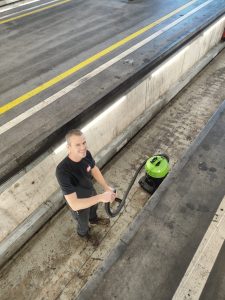
Meet Dennis
Co-owner and 5S/CI Consultant
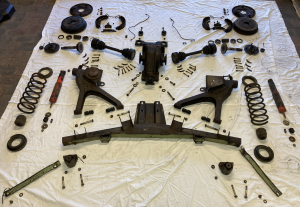
If something can be improved, Dennis won't let it slide. In fact, it *must* be improved. That drive is in his DNA. At sixteen, he bought a Volkswagen Beetle. The restoration was a significant undertaking and was fully completed years later. Not because it had to be done quickly, but because it had to be done right. Patient and persistent, with an eye for detail. That characterizes him. The 42-year-old lives with his wife, three children, and several pets in the village of Hoevelaken. He is a can-do type of person and is direct. He always tries to do the latter respectfully. His Christian upbringing and beliefs help him to continue doing so. You see this mentality reflected in everything he does. When a process gets stuck, he dives into it. If something isn't right, he brings structure to it. No temporary fixes, but improvements that last.
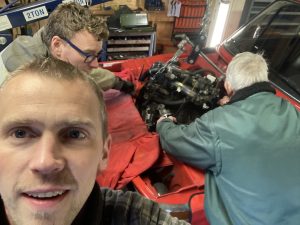
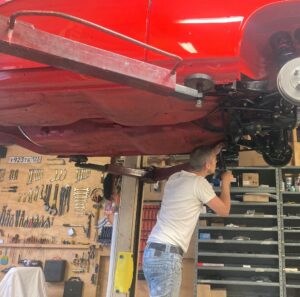
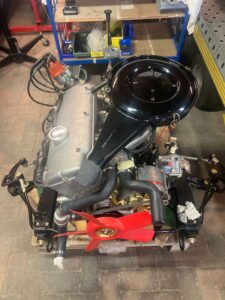
Wednesday evenings are sacred. That's when he's in his shed, tinkering with classic cars from the '60s to the '90s. Currently, he's working on his father's BMW 1502, and his father is actively involved too. No meetings or 5S rollouts for now, just complete focus. "I want to fix things, not search for them," he says with a smile. "Having a clear overview brings peace." He prefers repairing over replacing and seeks the root cause rather than a quick fix. He applies this same approach daily in his role as co-owner of 5S & CI Companymaking waste visible, understanding processes, and building improvement together, which is not a project, but a new standard.
From technology to continuous improvement
Dennis began his career in engineering. After completing his pre-university education (VWO), he studied Automotive Engineering at the Technical University (HTS) and interned at BMW in Munich. He progressed to production manager at a fire truck manufacturer at a young age, where he was responsible for dozens of employees. There, he saw how processes can go wrong, not due to unwillingness, but due to a lack of structure and coordination between departments. He was at the end of the chain and directly faced the consequences. We were the last step before the delivery to the customer, that had to be 100% correct. Dat was the moment he started looking at the organization behind the work. "I didn't just want to know how something was made, but why it was organized that way. Why do we do this? And can it be smarter?" That realization led him to Lean and 5SNot as a theory, but as a way to create calm and direction. "If the process is right, people get the space to do their work well. If it's not right, you'll keep putting out fires."
The Human Before the Method
Anyone who works with Dennis quickly notices that he is direct. He chooses this directness to create clarity, not to confront. For him, people always come before the method. "I am direct, that's true. But always with respect." He knows what it's like to depend on a flawed process yourself. That's why he doesn't start with a model, but with practice: on the shop floor, among the people who do the work every day. "That's where you hear what's really going on. You don't read it in a report, but you see it happening on the sidelines."
Just as easily, he then joins management. There, he brings not theory, but sharp decision-making. "If you only stay at the top, you miss what's really happening. And if you only stay at the bottom, you change nothing structural." That connection between the management team and the shop floor is essential to him. Improvement is achieved by listening, analyzing together, and sharing responsibility. By being the oil between teams, respecting each individual, and sometimes leaving your ego at home.
Resistance as a starting point
Change almost always evokes resistance. Dennis doesn't see that as an obstacle, but as a signal. Behind resistance lies involvement. People want their work to be right, but they are critical of what is imposed on them. What motivates him to continue when things get tough? Faith in the process. Not blind, but well-founded. When he sees that it can work and there is trust, he perseveres. “You don't learn car restoration in a weekend either,” he says with a wink. “If you keep building, you'll get there. But you have to be working on that car together. If someone is skeptical, I'll engage in conversation. There's often valuable information there.” By involving employees from the beginning, buy-in is created. The shop floor knows the bottlenecks best. By combining their knowledge with structure and methodology, improvements are created that last.
When does 5S *really* work?
Dennis sees the difference between organizations daily. using 5S only cosmetically and organizations using 5S as the foundation for a learning organization. The difference isn't in tape on the floor, but in behavior, ownership, and leadership. "Putting tape on the floor doesn't mean you're done with 5S; it's the beginning." 5S makes waste visible. It shows where time is lost, where processes falter, and where accountability is lacking. It requires energy, commitment, and honesty. And it asks something of everyone, especially of management and the leadership team. If it's not a visible priority there, it will naturally fade into the busyness of the day.
Therefore, he poses a pointed question: "If fifty people work eight hours a day, how many of them are actually adding value?" Not to confront, but to create insight. Because it is precisely that insight that leads to better collaboration, higher productivity, and more peace on the shop floor. "When everything is organized, other things stand out. 5S is not an end point. It is the beginning of continuous improvement."
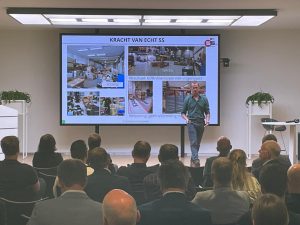
Dennis's advice to other companies looking to implement 5S and CI:
If your company wants to start with 5S or Continuous Improvement, start by being honest. Improvement begins with insight and a willingness to change. That is the foundation. If you are not brave enough to honestly examine your own processes and your own role in them, then it will remain an exercise in good intentions. Continuous Improvement is not a method you implement and then conclude. It requires commitment. From the management team, from leadership, and from the shop floor. Only when people take ownership of their processes and their way of working will there be lasting movement. If everyone embraces it, improvement doesn't become a project but a new standard in your organization.
COMPANY: 5S in CI Company
OVER TO YOU: Dennis van de Bunt (Co-owner and 5S/CI Consultant 5S and CI Company)